And that’s where the heart of the matter lies—not just in how we read a story, but in how we engage the world itself. Do we approach the world to live with it—or to take it apart in order to dominate it?
-
-
Wonder, Love, and Mushrooms
That is a surprising progression — from mushrooms to meaning, but it is possible because all things are united by their ultimate cause. The thoughts we draw from reality are like the fruiting bodies of a vast interconnected “network of being.” Beyond this, the Christian encounters reality not merely as “being” but also as a created order — an order that is, as Gerard Manely Hopkins puts it, “charged with the grandeur of God.” The inky cap mushrooms along my favorite walking path owe their existence to a creator. This gives my interactions with them a truly personal dimension. God is the giver. They are gifts. And I am the…
-
If Grade We Must
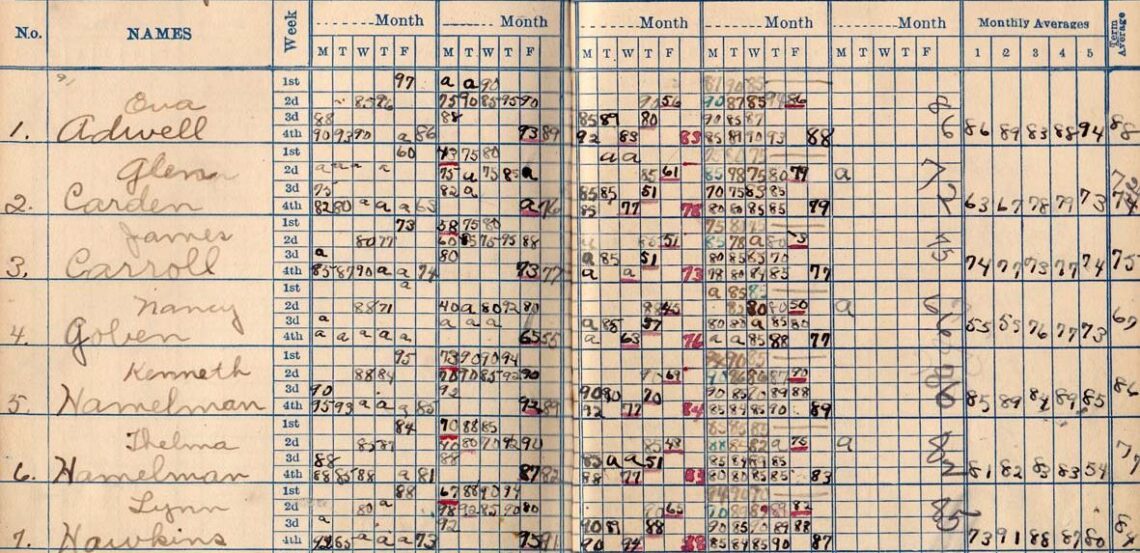
Grades may not be going anywhere soon, but even for those who would prefer not to grade, there is room to operate honestly somewhere between pure idealism and rank hypocrisy. While still assigning grades, a school can put policies and practices in place that help resist the worst effects of grade consciousness.
-
Rigor, Grades, Challenge, and Leisure
An authentic, intellectually challenging education summons students to a difficult task, yes, but it also summons them to something real. Its arena is not the confined dimensions of a classroom or the fixed hours of a school day but the boundless world in which we live. True intellectual challenge is animated by the spirit of exploration; mere academic rigor by the specter of the grade.
-
Qualitative vs. Quantitative Assessment
Numbers are not more real than words. On the contrary, the idea that a number like 82.3% could serve as a summary of student performance is the real problem. It cannot. What a student has learned is demonstrated in the skills, knowledge, understanding, and habits of mind he has acquired. Those skills are best understood linguistically, not numerically.