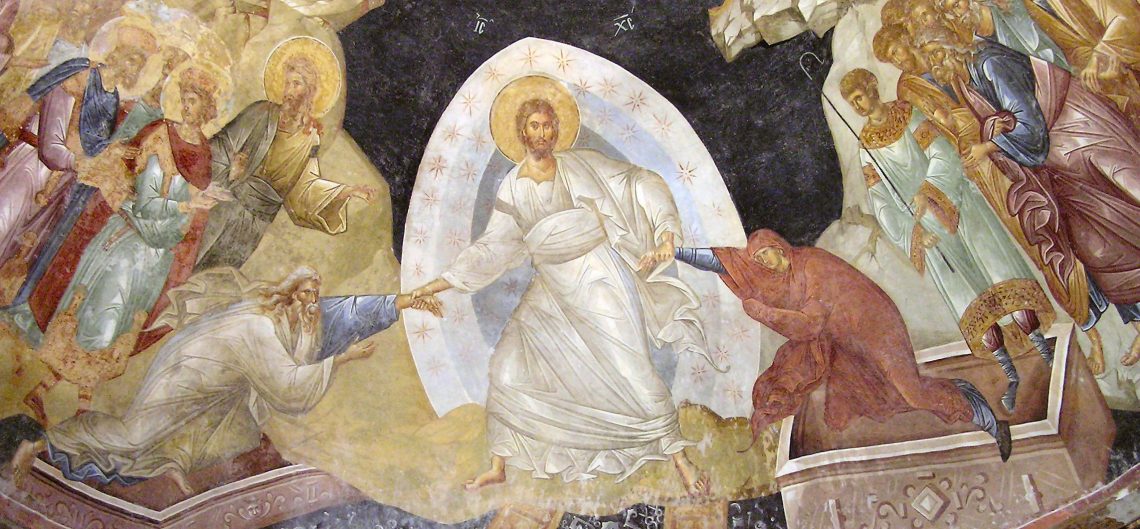
Truly he goes to seek out our first parent like a lost sheep; he wishes to visit those who sit in darkness and in the shadow of death. He goes to free the prisoner Adam and his fellow-prisoner Eve from their pains, he who is God, and Adam's son.
-
-
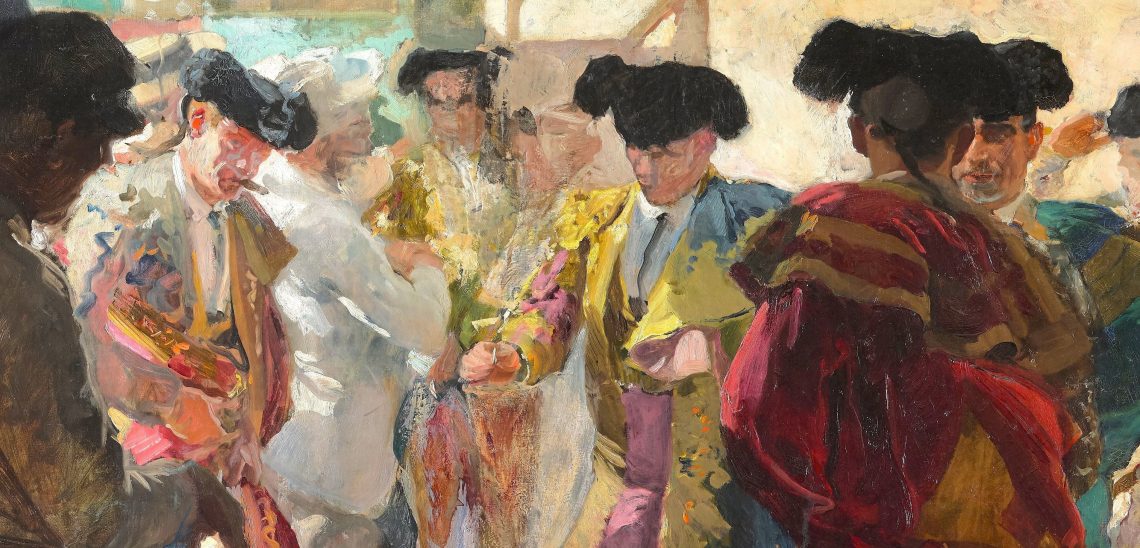
Before the Bullfight
It’s incredible to imagine a painter covering the entire surface of this canvas with their thought and attention. And it’s incredible to see photos of this painter, Joaquin Sorolla, working on location, in the open air, with brushes that look like javelins, on canvases that resemble billboards. I don’t know how much of Before the Bullfight was painted outside, but the painting has both the fresh spontaneity of a plein air work, and the considered compositional architecture of a well-planned studio piece. Sorolla is somehow able to have it both ways.
-
“Petty Frustrating Crap” and the End of Inconvenience
All sacred relationships are formed in the crucible of inconvenience. Family. Marriage. Lifelong friendship. Religious community. None of it is convenient. Shoot, not even book clubs or bowling leagues are convenient. It’s no coincidence that our culture is coming to view them as increasingly unnecessary. A truly radical transformation in what we mean by “society” and how we experience others is already underway.
-
The Pascal Homily of St. John Chrysostom
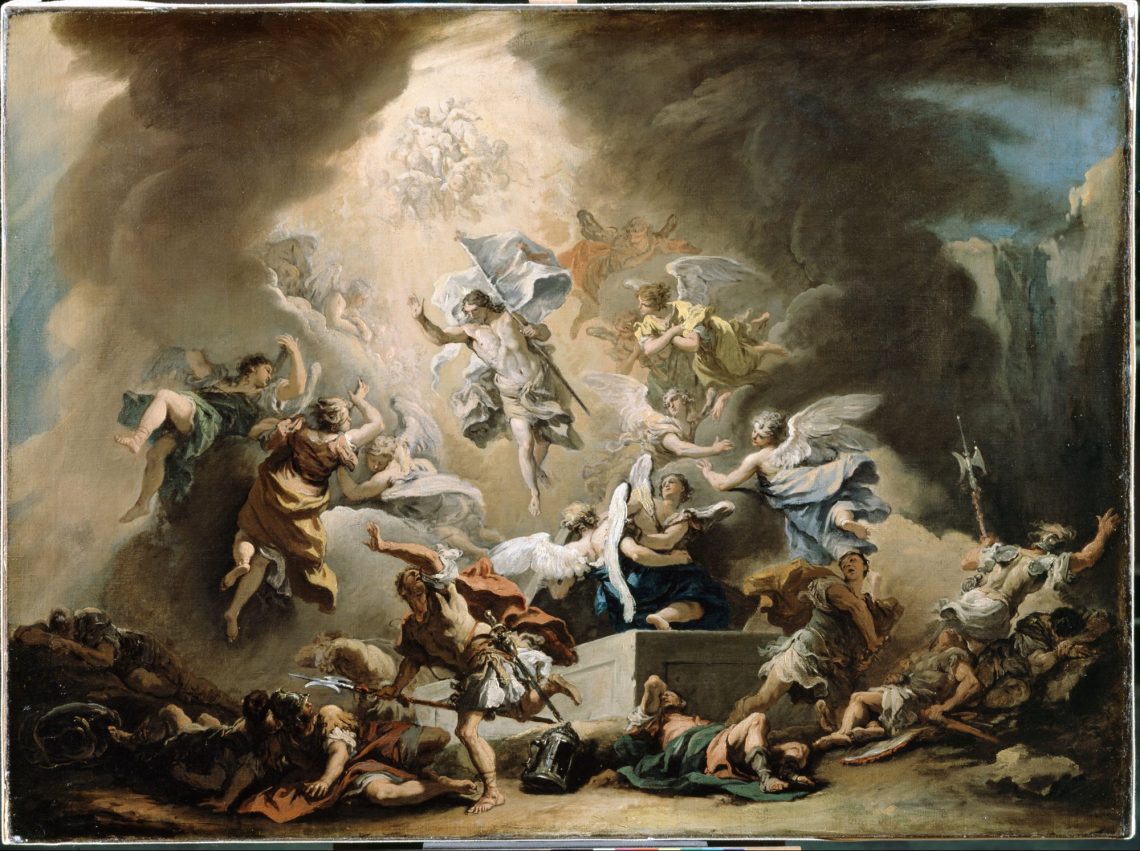
c. 400 A.D. Are there any who are devout lovers of God?Let them enjoy this beautiful bright festival! Are there any who are grateful servants?Let them rejoice and enter into the joy of their Lord!Are there any weary with fasting?Let them now receive their wages! If any have toiled from the first hour,let them receive their due reward;If any have come after the third hour,let him with gratitude join in the Feast!And he that arrived after the sixth hour,let him not doubt; for he too shall sustain no loss.And if any delayed until the ninth hour,let him not hesitate; but let him come too.And he who arrived only at the…
-
Reckless Hope
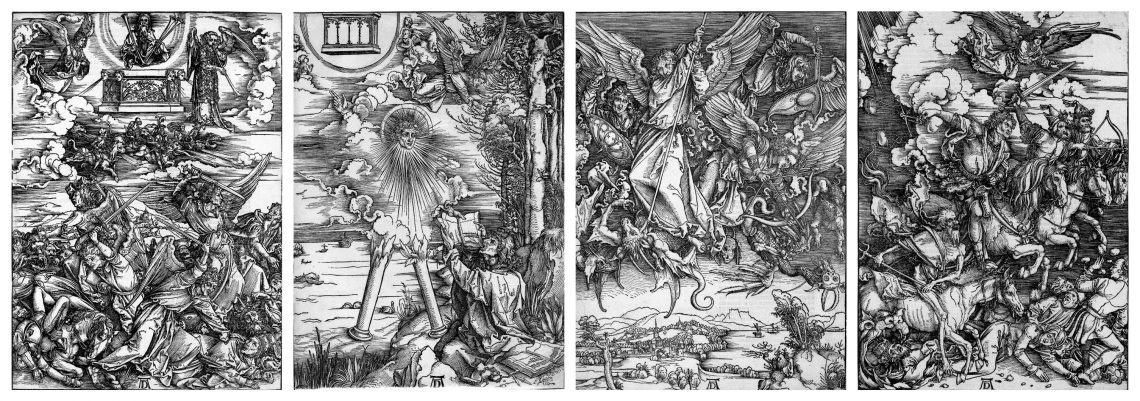
Too often, people try to reduce Revelation to a riddle to be solved, as though the beasts and bowls, trumpets and thrones could be decoded into a neat timeline. To be sure, apocalyptic language has a logic to it—a symbolic grammar that can and should be studied, much like one might analyze poetry or music. Understanding the meaning of those symbols is part of engaging the text; in some ways, Revelation is like a puzzle. But it can’t stop there. Once you’ve “figured it out,” you don’t simply close the book, heave a sigh of intellectual satisfaction, and move on. To do so would be like pulling apart the pieces…